

Nepal communal violence opinion – A curfew can quiet a street. It cannot quiet a grievance.
That’s the hard truth facing Nepal this week. Violence broke out in Sunsari district after a dispute over loud music and religious flags during a Hindu procession turned into clashes between Hindu and Muslim groups. Al Jazeera reported that the unrest left three people dead, and authorities responded with curfews and promises to restore peace. A mall in nearby Siraha was set on fire during the clashes.
Prime Minister Balendra Shah broke his public silence to address the nation. He urged citizens to act responsibly and help, in his words, “remove the clouds of unrest.” It was a rare moment. Shah has kept a low profile since taking office in March.
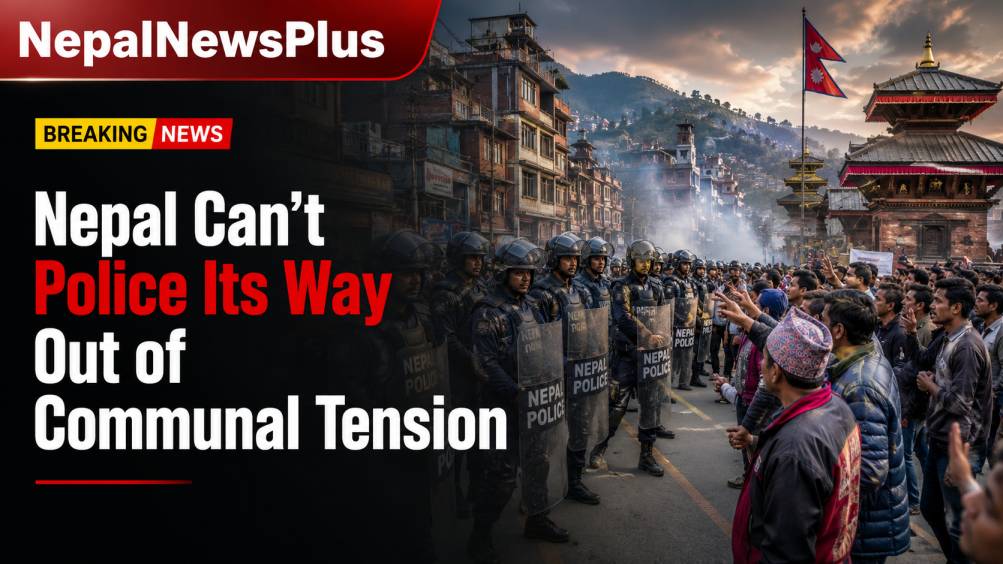
What Actually Happened in Sunsari? – Violence Openion
The trouble started in the Kaptangunj area, according to Outlook India. Clashes there killed one person and injured more than a dozen, including security personnel. Curfews first covered part of the district, then spread to more areas as tension grew.
Sunsari sits right on the India border. That location matters. Unrest here can spill across a border in hours, not days.
The government’s response followed a familiar script:
- Impose a curfew
- Deploy more police
- Promise an investigation
- Ask people to stay calm
This is not new. Nepal used the same playbook in Nepalgunj back in 2023, when a social media post sparked a clash that injured 22 people. It used a version of it in Birgunj in January 2026, after a TikTok video led to a mosque being vandalized. Each time, the fire gets put out. Each time, the fuel stays right where it was.
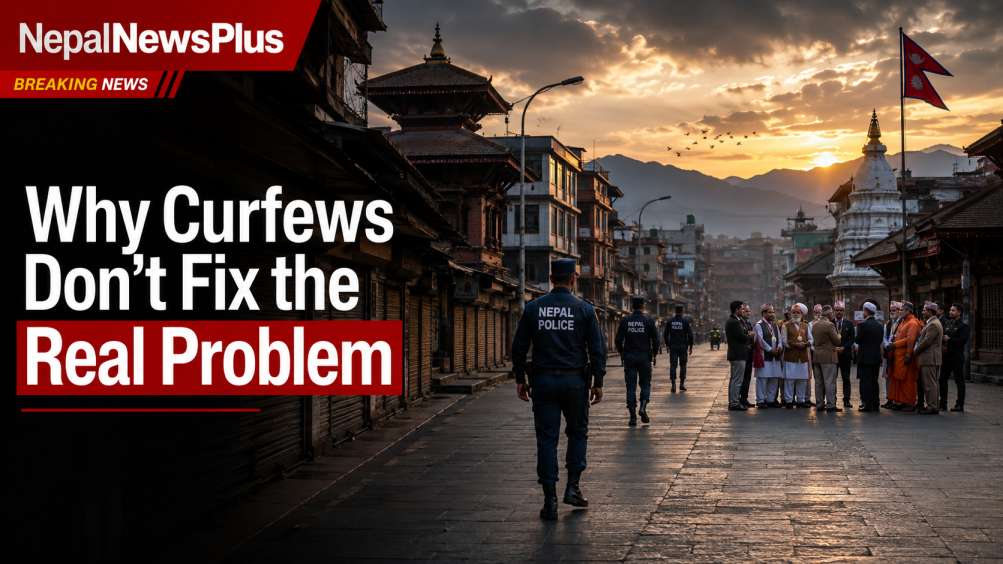
Why Curfews Don’t Fix the Real Problem
Police can stop a mob today. They cannot fix why the mob formed.
Loud music during a religious procession is not really about music. It’s about which community gets to feel like it belongs, and which one feels ignored. Add unemployment, weak local governance, and a border region with its own tangled politics, and a small spark turns into a fire fast.
Here’s the uncomfortable question nobody in power wants to answer: if curfews worked, why does this keep happening in different towns, year after year?
Is the ‘Hindu Nation’ Movement Feeding This?
Nepal became a secular republic in 2008, ending centuries as a Hindu kingdom. But that decision never sat well with everyone. A monarchist and Hindu-nationalist movement has grown louder since 2023, led by figures like Durga Prasai and parties such as the Rastriya Prajatantra Party (RPP).
In January 2026, the interim government signed a 12-point agreement with Prasai’s campaign. It agreed to study restoring a Hindu state and possibly the monarchy. That agreement did not come from nowhere. Rallies for the cause have drawn thousands, with organizers pointing to joblessness, high prices, and weak public services as reasons people miss the old order.
Every time a Hindu-Muslim clash makes headlines, it hands that movement another talking point. Supporters can argue that secularism failed to protect Hindus, so the country should bring back a Hindu state. Whether or not that argument holds up, incidents like Sunsari make it louder.
That doesn’t mean the movement caused the violence. It means the violence and the movement now feed each other. One gives the other a reason to grow.
What Would Actually Help?
Real solutions look less dramatic than a curfew, but they last longer:
- Local mediation committees that include leaders from every community, not just the majority
- Faster, transparent investigations, so no group feels the law protects one side more than the other
- Economic investment in border districts like Sunsari, where poverty and neglect make tension easier to spark
- Rules for social media platforms during unrest, since past clashes in Nepalgunj and Birgunj both started online
None of this is quick. None of it makes for a strong headline. But a curfew is a pause button, not a fix.
What Happens Next
Prime Minister Shah has promised compensation for victims and action against those responsible. That’s a start, not an ending. The real test is whether Nepal treats Sunsari as one more fire to put out, or as a warning about what keeps starting the fires in the first place.
If nothing changes on the ground, the next clash is only a matter of when, not if. And each time it happens, someone will be ready to use it to argue that secular Nepal has failed.
Nepal communal violence opinion: Curfews may stop today’s violence, but lasting peace needs dialogue and trust. Lessons from the Sunsari clashes.

Leave a Reply